Planning a Nigerian Wedding Without Starting Your Marriage in Debt
A Nigerian wedding is not a wedding. It's a production. There's the engagement. The introduction. The traditional ceremony. The white wedding. The reception, sometimes two receptions. And woven through all of it: aso-ebi fabric, event planners, caterers, DJs, photographers, videographers, makeup artists, a venue (or three), generators to power the venue, and gifts for in-laws whose list of requirements arrived in a WhatsApp message that made your heart sink.
The average Nigerian wedding in 2026 costs between ₦2,000,000 and ₦8,000,000, depending on the city, the family expectations, and how far the couple is willing to stretch. In Lagos, the floor for a "modest" celebration is rarely below ₦3,000,000. On the Island, it's closer to ₦5,000,000.
These are real numbers. And for most couples, they don't come from savings. They come from loans, contributions, family pressure to overspend, and the quiet financial stress that begins the marriage in a hole.
There is another way. It doesn't require you to elope. It requires you to treat the wedding like what it actually is: a financial project with a timeline, a budget, and the most important audience of two.
Why Wedding Budgets Collapse
The problem with most Nigerian wedding budgets isn't that they're unrealistic. It's that they're fragile. They're built as a single document, a spreadsheet with line items, that looks solid in March but is unrecognizable by September.
Here's what happens:
The aso-ebi vendor raises prices. The venue requires a deposit three months earlier than planned. Mum adds a category ("we need to spray at the traditional"). The MC charges more than the friend who was supposed to do it for free. Each change is small. Together, they push a ₦3,500,000 budget to ₦4,800,000 without anyone noticing until it's too late.
The deeper problem is structural. A wedding has dozens of expense categories that hit at different times across 6 to 18 months. A flat spreadsheet can't handle the timing. It tells you the total but not how much you should have saved by July, not which line items have been paid and which are pending, not whether the money you just received as a gift should go to the caterer or the decorator.
Treat It Like a Project
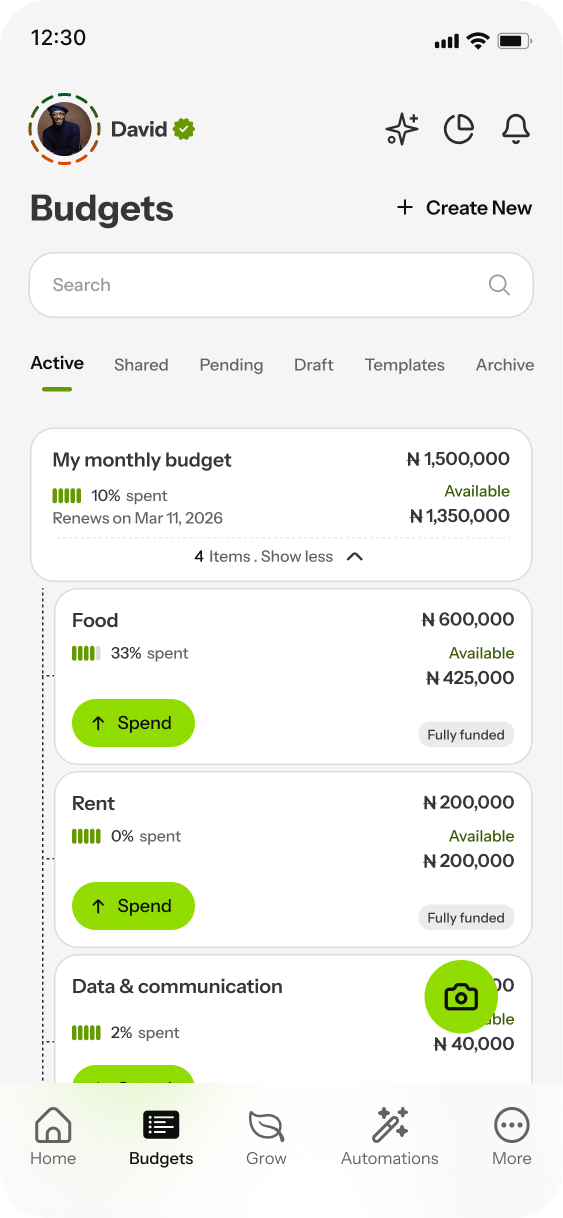
The goal is clear: get married without starting the marriage in financial distress. In Delight, the wedding becomes a budget group, with a sub-budget for every major cost. You can start from the Wedding Budget template and change every name and amount.
Inside the group, every major cost becomes its own sub-budget:
Venue(s): Traditional ceremony venue, white wedding venue, reception hall. Each with its deposit timeline and balance due date.
Catering: Food, drinks, small chops, cake. Often the single largest line item.
Aso-ebi: Fabric, sewing, distribution logistics. Factor in that some buyers will pay late or not at all.
Photography & video: Pre-wedding shoot, ceremony coverage, reception coverage, editing.
Attire: Bride's outfits (often 3 to 4 changes), groom's outfits, accessories, makeup.
Family obligations: Introduction list, in-law gifts, bride price-related expenses. This is the line item that surprises couples the most.
Entertainment: MC, DJ, live band if applicable.
Decor & logistics: Flowers, lighting, generators, chairs, canopies, transport.
Buffer: 10 to 15% of total. Non-negotiable. This is where the unexpected goes instead of into debt.
The Timeline Saves You
The most powerful thing about treating a wedding as a project is the timeline.
If the wedding is in December and it's currently March, you have 9 months. If the total budget is ₦4,000,000 and ₦500,000 is already saved, you need ₦3,500,000 in 9 months. That's roughly ₦390,000 per month.
Can both partners set that amount aside together? If yes, autofund the wedding budgets each month, so the money reaches them before anything else can use it. If no, that's important to know now, in March, not in October when the caterer needs final payment and the money isn't there.
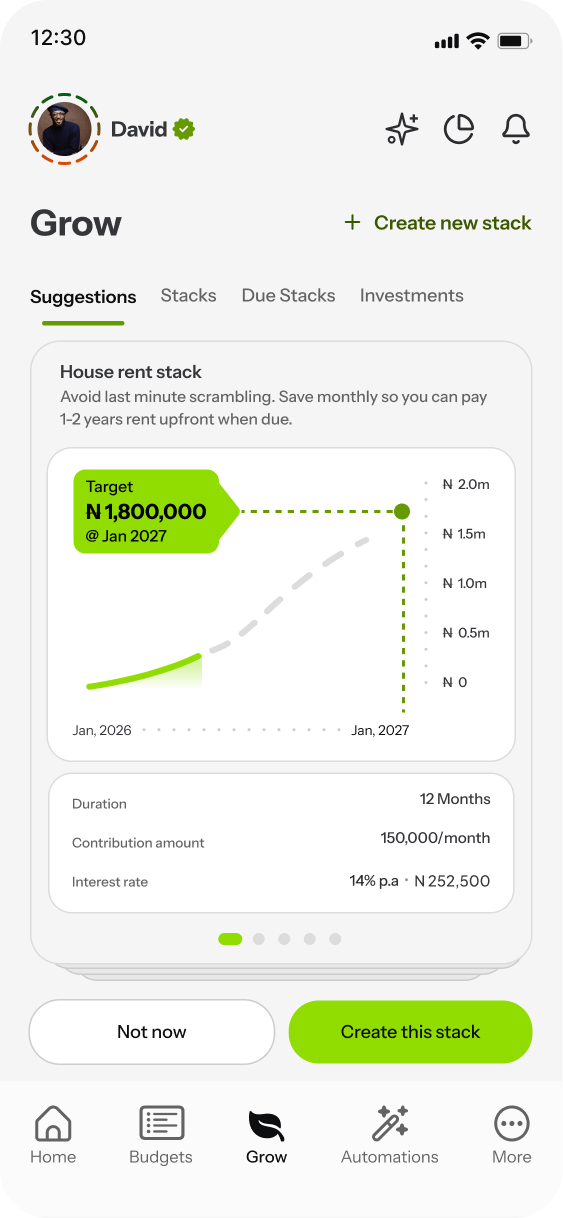
The timeline forces honesty early. It converts a terrifying total into a manageable monthly number. And it makes the trade-offs visible: if ₦390,000 per month is too much, the answer is either to extend the engagement (more months, smaller monthly amount), reduce the budget (fewer guests, simpler venue), or increase income (side projects, family contributions). All of those decisions are better made in March than in panic during October.
Joint Visibility Changes Everything
Weddings stress relationships because one partner often has more financial visibility than the other. One person manages the spreadsheet. One person negotiates with vendors. The other sees sporadic updates and large withdrawals and wonders whether things are under control.
When the wedding budgets live in Delight, you can share them with your partner. You both pay from the same budgets, every payment shows who made it, and each budget shows exactly what's left. The decorator budget is at 80% with three months to go? Both people see that. The catering budget is underspent because a family member offered to handle small chops? Both people see that too, and can decide together where the freed-up money should go.
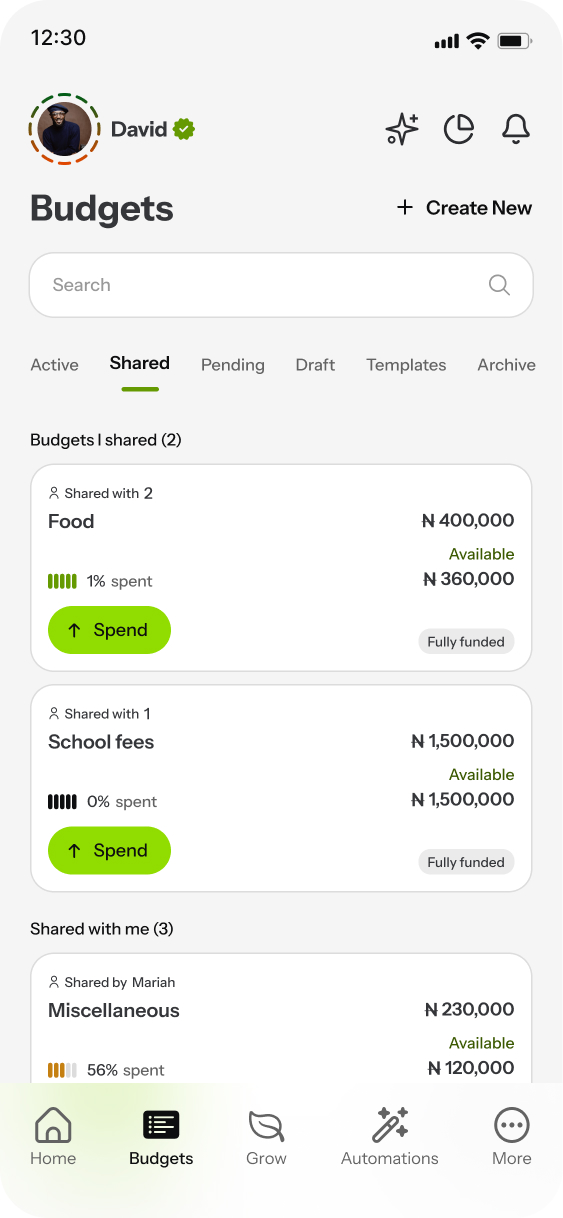
This shared visibility does for wedding planning what it does for marriage finances in general: it replaces anxiety with information, and replaces arguments with decisions.
After the Wedding
The best wedding budget does one more thing: it transitions gracefully into married financial life.
Couples who run the wedding from Delight budgets already have the system in place. When the wedding is over, its budgets close, but the structure remains: shared budgets, autofunding and automated payments. The infrastructure that organized the wedding now organizes the marriage.
A couple who budgets the wedding this way doesn't start the marriage wondering how to manage money together. They've already been doing it for months.
The Wedding or the Marriage
Nigerian wedding culture is beautiful, elaborate, and expensive. That's not going to change, and it shouldn't have to.
What should change is the financial chaos that surrounds it. The loans taken out of desperation. The credit card balances hidden from a partner. The first month of marriage spent not in newlywed bliss but in the quiet stress of figuring out how to pay for what just happened.
A wedding is one day. A marriage is the rest of your life. The budget should protect both, but if you have to choose, protect the marriage.
Treat the wedding as a project. Fund it over time. Make the trade-offs early. Share the visibility. And walk into your marriage with clarity instead of debt.
Read next
- How newlyweds can set up money in the first year
In the first year, decide the system before habits decide it for you.
- How to enjoy owambe season without the aso-ebi debt
Owambe spending hurts when every invitation is decided on its own, from the same money as rent and food.
Plan the money. Fund the plan. Spend from the plan.
In Delight, each purpose is a budget that holds its own money, and you pay from the budget each payment serves.
Download Delight