The Money Conversation Every Nigerian Couple Avoids
There is a conversation that every couple in Nigeria needs to have and almost none of them do. It's not about cheating. It's not about in-laws. It's about money, specifically, about how the two of you are going to handle it together.
Not in theory. Not "one day when we're more stable." Now. With the income you currently have, the obligations you currently carry, and the future you're currently building whether you've planned for it or not.
We know this because Delight was born from exactly this silence. Two co-founders who were also married to each other, who fought about a generator purchase and realized the fight wasn't about the generator at all. It was about the absence of a shared financial plan.
Why Couples Avoid It
The avoidance isn't laziness. It's protection.
Money in Nigerian relationships carries weight that personal finance blogs rarely acknowledge. There are cultural expectations about who earns, who provides, who manages. There's the pride that makes admitting financial stress feel like admitting failure. There's the fear that transparency about money means transparency about everything, and that can feel like vulnerability neither partner signed up for.
There's also a practical barrier: most couples don't have a framework for the conversation. They know they should "talk about money," but talk about what, exactly? How much each person earns? Who pays for what? Whether to save or spend? The topic is so large and so loaded that starting feels impossible.
So the default becomes silence. And silence, over time, becomes a system of its own, one built on assumptions, unspoken resentments, and occasional explosions when a purchase crosses an invisible line neither person drew.
The Cost of Silence
Here's what silence looks like in practice. We've heard versions of this from hundreds of couples:
One partner pays rent and assumes the other is saving. The other is covering school fees and food and assumes the first partner knows. Neither has said any of this out loud. Both feel they're carrying more than their share. Both are right, because there's no shared accounting of the whole.
Or: one partner earns more and makes financial decisions unilaterally, not out of malice, but because it feels efficient. The other partner feels excluded, not from the money but from the decisions. The resentment builds quietly until it erupts over something trivial. A data subscription. A gift for a friend. A new pair of shoes.
The fight is never about the shoes.
The Conversation: A Practical Framework
What follows isn't a script in the theatrical sense. It's a structure, a set of questions that move the conversation from avoidance to clarity. It works best done together, sitting down, with no distractions and no phones (ironically, until it's time to set up the budgets).
Step 1: The Number. Both partners state their monthly income. Out loud. If one or both have variable income, state the lowest reliable amount. This isn't about judgment. It's about establishing the total pool you're working with.
Step 2: The Obligations. List every recurring expense and obligation: rent, transport, food, utilities, family support, debt repayments, subscriptions. Everything. Assign each to whoever currently pays it. The goal is to see the full picture for the first time, not to renegotiate who pays what (that comes later).
Step 3: The Gap. Subtract total obligations from total income. The number that remains is your actual shared margin. This number may surprise both of you. If it's negative, that's important to see together rather than each person feeling it alone.
Step 4: The Priorities. With the margin visible, decide together: what are the three most important things this money should do in the next three months? Rent savings? Emergency fund? A specific goal? This is where the conversation shifts from surviving to choosing.
Step 5: The System. Create the budgets. Allocate the money. Decide the autofunding hierarchy together, what fills first, what fills last. If you're sharing a Delight account, both of you see the same budgets, the same balances, the same reality. If you're keeping separate accounts with a shared view, decide which budgets are shared and which are personal.
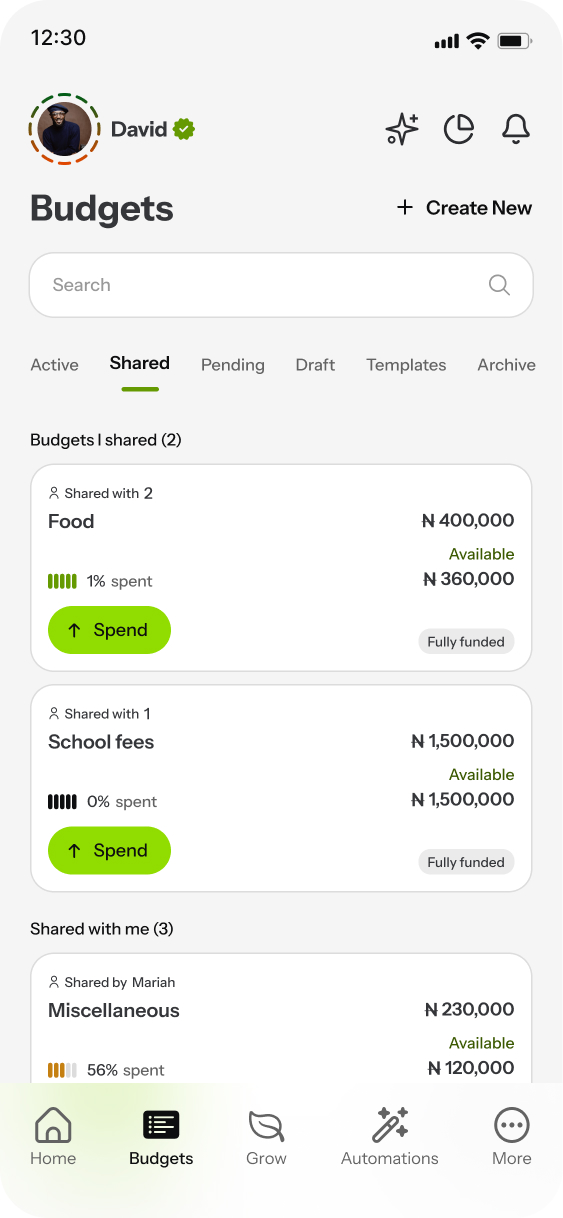
The entire process takes 30 to 45 minutes. It's uncomfortable the first time. By the third month, it's a routine that takes 10 minutes because the budgets are already set. You're just adjusting, not rebuilding.
What Changes After the Conversation
The most common thing couples tell us after having this conversation isn't that they saved more or spent less. It's that they stopped fighting.
Not because the money problems disappeared. Most of the time, the financial situation is exactly the same the day after the conversation as it was the day before. What changes is the dynamic. Both partners know the number. Both partners see the obligations. Both partners agreed to the plan. When a purchase happens, it happens inside a system that both people built, not against an invisible expectation that only one person holds.
This is what Delight makes visible in real time. When both partners see that the food budget has ₦18,000 left and the personal budget has ₦7,500, the conversation about whether to eat out on Friday becomes a five-second glance at the app, not a loaded negotiation about values and priorities.
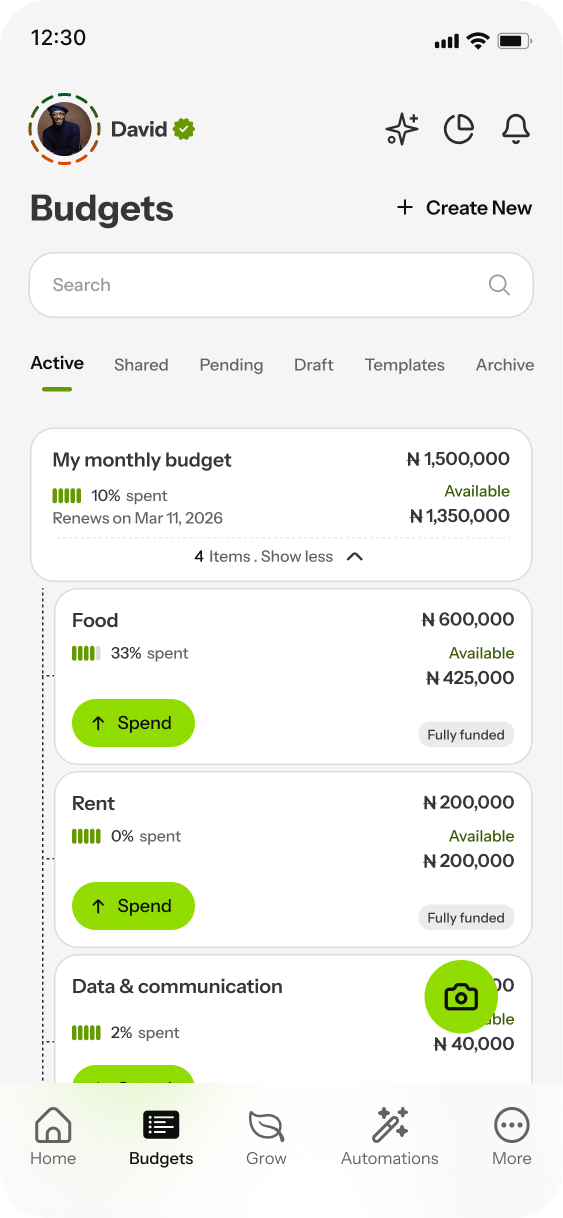
The budget does the arguing for you. And budgets don't carry resentment.
Common Objections (And Honest Answers)
"My partner earns more. Won't this conversation make things awkward?" It's already awkward; you're just not naming it. Income differences don't go away by ignoring them. What the conversation does is turn an imbalance into an agreement. Maybe the higher earner covers rent while the other covers food and utilities. Maybe contributions are proportional. The answer depends on your relationship, but it has to be a decision, not a default.
"We're not married yet. Isn't this too early?" If you're sharing expenses (rent, dates, travel, groceries) you're already managing money together. You're just doing it without a plan. The conversation doesn't require marriage. It requires shared spending, which starts long before the wedding.
"What if we disagree?" You will. That's the point. Disagreement inside a system (where both people see the numbers) is productive. Disagreement without a system (where both people are guessing) is a fight. The budgets don't eliminate disagreement. They make it about ₦5,000 moving from savings to entertainment, not about whose financial philosophy is right.
The Conversation You're Already Having
Here's the thing nobody says: you and your partner are already having the money conversation. You're having it through silence, through assumptions, through the tension that shows up when someone spends more than the other expected, through the relief when payday lands and the cycle resets.
That's a money conversation. It's just a bad one.
The one we're describing takes 30 minutes. It's uncomfortable exactly once. And what it replaces, the slow erosion of trust, the fights about shoes and generators, the loneliness of carrying financial stress alone, is worth every second of that discomfort.
The conversation you're avoiding isn't the one that causes the fighting. It's the one that ends it.
Ready to take control of your money?
Download Delight Finance and create your first spendable budget in under 2 minutes.
Get Started — It's Free