How to Budget Your Salary in Nigeria (2026)
To budget a salary in Nigeria, start from your take-home pay, not your gross. Give every naira a purpose before you spend any of it. Fund the purposes that fail worst first: rent, food, transport and family obligations. Then make the plan hold at the moment you pay, and adjust next month from what actually happened.
Each step matters, but the last two are where most budgets fail. Here's the whole sequence.
Step 1: Start from what actually lands
Your budget can only spend what reaches your account: gross pay minus PAYE, your pension contribution and any other deductions on your payslip.
The Nigeria Tax Act 2025 changed PAYE from 1 January 2026. The first ₦800,000 of annual income is taxed at 0%. Income above that is taxed in bands from 15% up to 25% for income above ₦50 million a year. The old consolidated relief allowance is gone, replaced by a rent relief of 20% of the annual rent you pay, up to ₦500,000 (SafeGuard Global, November 2025). If you rent, ask your employer how the relief is being applied. Your payslip is the final word on your own take-home.
Step 2: List purposes, not categories
A category is a label. A purpose is something the money must accomplish.
List everything your salary has to do, including what doesn't arrive monthly:
- What repeats: food, transport, electricity, data, subscriptions.
- What arrives in lumps: rent paid yearly (divide by 12), school fees paid per term, insurance and professional dues.
- The people you support: parents, siblings, dependants. If it's regular, it's a purpose with an amount, not something that comes out of whatever is left.
- The life you actually live: outings, owambe, aso-ebi, giving. Planned amounts, not guilt.
- A reserve: for what you can't predict.
Step 3: Fund what fails worst first
Money is finite. When purposes compete, the order decides which one runs short, so choose the order deliberately.
Put first the purposes whose failure costs the most: rent, food, transport to the work that pays you, and the family obligations you've committed to. Then the reserve. Then everything else. An unfunded obligation doesn't disappear; it comes back as an emergency.
Step 4: Assign down to zero
Keep assigning until no naira is left without a purpose. If your purposes cost more than your salary, you find out now, while you can still choose which purpose gets less, instead of on the 22nd. Zero-based budgeting walks through this in detail, and here's why the 50/30/20 rule doesn't do this job in Nigeria.
Step 5: Make the plan hold when you pay
This is where most budgets fail. The plan is written down; the salary sits in one balance; and every payment, at a POS terminal or by transfer, draws from the same pool. Nothing stops a weekend from using rent money, and nothing records that it did.
A plan only holds when four things are true:
- Each purpose holds its own money, so its balance is what it has left.
- Payments come from the purpose they serve, so every naira spent is visible against the right purpose.
- Money that must wait is protected, for example next year's rent.
- Payments that repeat happen on their own, so they don't depend on you remembering.
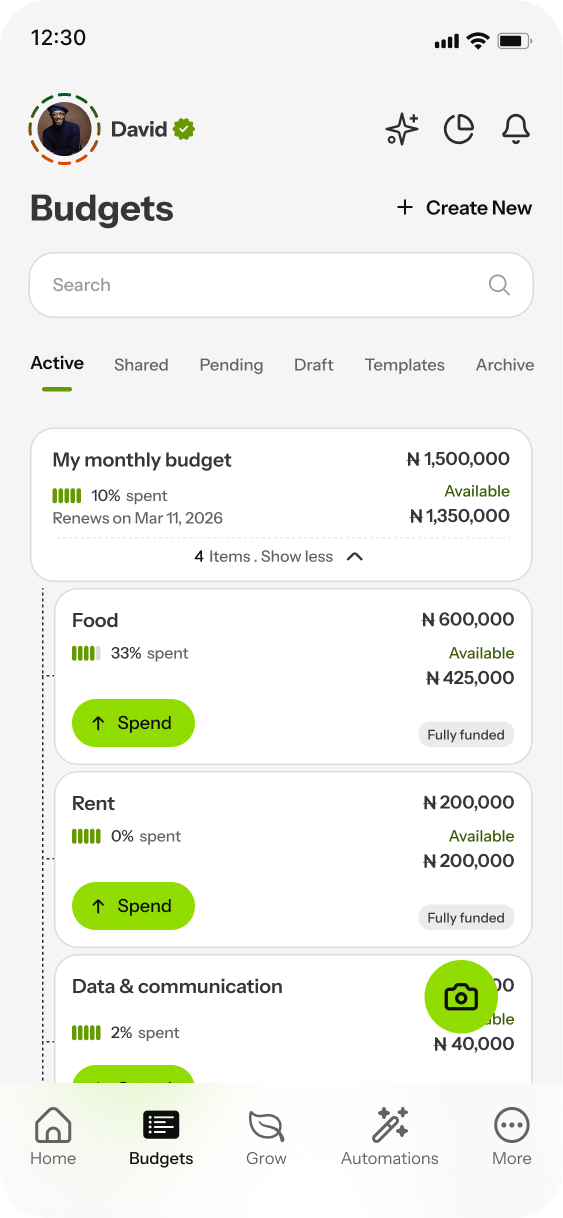
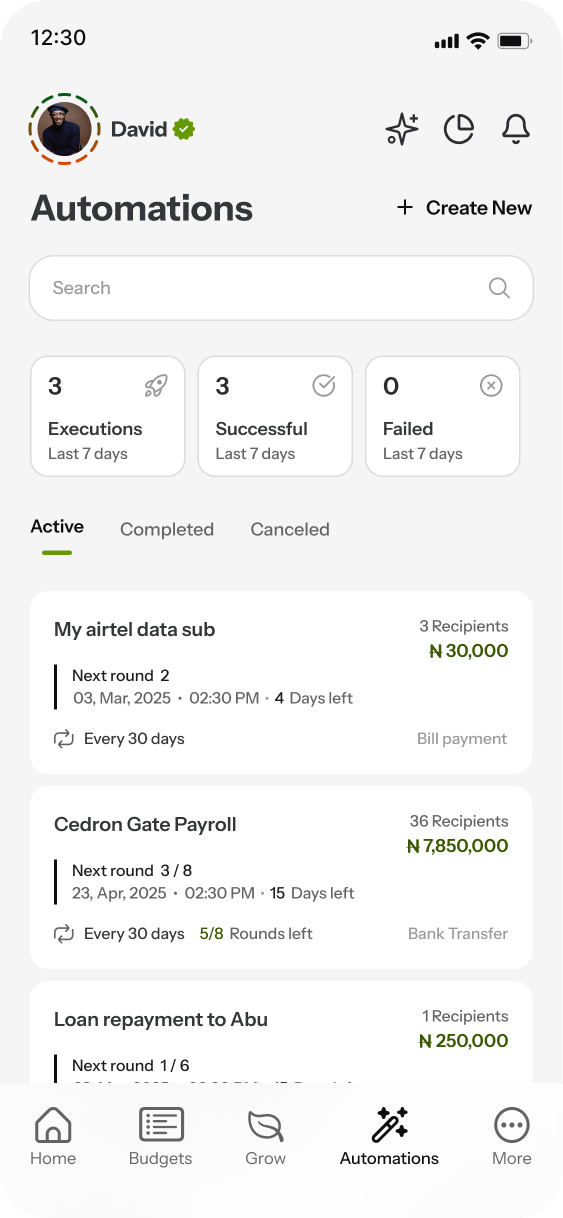
In Delight, those four things are how the app works. Each purpose is a budget that holds its own money, and auto-funding fills your budgets in the order you set when your salary lands. You pay from the budget each payment serves. A lock keeps a budget's money from being spent until a set time or until it's fully funded. Automations send recurring payments, such as family support to several people, from the right budget on schedule.
Step 6: Adjust from what happened
At the end of the month, look at three things: which purposes ran out, which had money left, and where money moved between purposes. Then change next month's amounts from that, not from what you hoped.
Money left in a purpose is not "free money". Decide where it goes: into next month's budget, a reserve, or a bigger purpose coming up. In Delight, each repeating budget has a leftover setting for this: roll the money over, return it to your wallet or move it to surplus.
How the plan changes as income rises
The steps stay the same at every income. What changes is where the risk is.
When needs take most of the salary (around ₦100,000–₦150,000): the risk is shortage. There's little slack, so one unplanned payment can break the month. Protect the essentials first, keep even a small reserve, and let Drip mode release food or transport money weekly rather than all at once. Here's a worked ₦200,000 budget in Lagos.
When there's room (around ₦300,000–₦500,000): the risk shifts to leakage. The salary covers the needs comfortably, so the extra feels like permission. Name the surplus before it goes: a rent Stack, a reserve and the bigger purposes on your horizon. Then put a spending limit on outings, so going over is a choice you can see.
When most of it is surplus (₦1,000,000 and above): the risk is money without direction. Needs are a small share, and every single purchase is affordable, which is exactly how large amounts disappear with nothing to show. Give the surplus its purposes before lifestyle does, and review them every month.
Frequently Asked Questions
How do I budget my salary in Nigeria?
Start from take-home pay, list every purpose including annual rent and family support, fund the purposes that fail worst first, assign every naira until none is left without a purpose, then make the plan hold by paying each expense from the purpose it serves. Adjust next month from what actually happened.How much of my salary should go to rent?
Enough to fund next year's rent in monthly amounts: your annual rent divided by 12. If that can't be funded alongside food, transport and your obligations, the budget shows the gap now, while you can still act on it.How much of my salary should I save?
There's no single right percentage. Fund a reserve and the large payments you know are coming, such as rent and school fees, as named purposes with amounts, before discretionary spending. A small amount set aside first holds better than a large amount hoped for at month end.How does the new tax law affect my take-home pay?
From January 2026, the first ₦800,000 of annual income is taxed at 0%, higher income is taxed in bands from 15% to 25%, and renters can claim relief of 20% of annual rent up to ₦500,000. Check your payslip for your exact take-home.Why does my salary finish before month end?
Usually because the whole salary sits in one balance, so money already needed for rent or bills looks available and gets spent. Here's the full explanation.Read next
- How to make your salary last till month end
A salary runs out early when the whole month's money is spendable from day one.
- How to stop borrowing money every month
Most monthly borrowing isn't caused by one big expense.
Plan the money. Fund the plan. Spend from the plan.
In Delight, each purpose is a budget that holds its own money, and you pay from the budget each payment serves.
Download Delight